Can you afford the right AI plan without sacrificing creative control? You need clear facts to decide. Navigating the complex world of nsfwai plus pricing affects both your budget and your creative output.
The market in 2026 favors high-quality, uncensored generation tools. Creators now demand reliable nsfw content options that scale with projects.
This guide gives a concise breakdown of tiers from free entry levels to pro subscriptions. You will learn trade-offs between cloud APIs and local hardware, so you can pick the plan that matches your workflow and monthly spend.
Key Takeaways
- Understand cost vs. control: cloud services ease setup; local hardware may cut long-term costs.
- Match plan to use case: developers and creators have different needs for content consistency.
- Watch hidden fees: token limits and overage charges change total cost quickly.
- Prioritize reliability: uptime and model updates affect output quality and budget.
- Plan for growth: choose flexibility to scale generation needs without surprise bills.
Understanding the NSFWAI Plus Pricing Landscape
The market for adult content tools rests on three filter layers: prompt, inference, and training-data. Hugging Face research shows these layers shape output quality and censorship levels.
Prompt filters block or rewrite user text before generation. Inference classifiers act during generation and often lower image and text fidelity. Training-data limits shape a model’s core knowledge and style.
“Three filter layers — prompt, inference, and training-data — collectively determine what a generator will produce.”
Many platforms claim “no prompt filters” while still applying inference checks that reduce quality. When you compare platforms, focus on how each handles privacy, data retention, and uncensored access.
| Filter Layer | Effect on Output | What to Check | Impact on Costs |
|---|---|---|---|
| Prompt | Blocks or alters user text | Transparency and logging | May force retries, raising costs |
| Inference | Flags content during generation | Classifier strictness and tunability | Lower quality can need more runs |
| Training-data | Defines model creativity and style | Scope, sources, and retention policy | Premium models often cost more |
Value comes from tools that give uncensored access while preserving core generation capabilities. Balance the cost of tiers against the quality, privacy, and features you need for reliable creation in 2026.
Core Factors Influencing Your Subscription Costs
Subscription costs hinge on how much you actually use the service and which features you unlock.
Usage Limits
Your monthly bill ties directly to limits. Services set caps on messages, tokens, or image generation.
For example, ChatGPT Plus is commonly cited at $20/month for advanced chat access. Claude Pro offers a large 200,000 token context that suits long document work.
If you run many high-res images or long conversations, message-based rate limits can force more runs and raise costs.
Feature Access
Paid tiers unlock model upgrades, voice synthesis, character LoRA support, and priority queues.
These features improve quality and speed, but they add to the monthly cost. Decide whether voice or extra context adds real value for your creation needs.
| Factor | Example | Effect on Costs | Who it matters to |
|---|---|---|---|
| Usage limits | Message/token caps | Overages or higher tiers | High-volume users |
| Feature access | Voice, LoRA, high-res images | Higher monthly fees | Creators, studios |
| Billing model | Subscription vs API | Predictable vs variable costs | Developers, agencies |
| Context window | 200k tokens (Claude Pro) | Better long-form context, higher tier | Researchers, editors |
Analyzing the Free Tier and Its Limitations
Free tiers give you a peek at capabilities, but their limits shape how you actually work. These plans are useful for quick tests, not sustained production.
Most free platforms impose strict rate limits that break workflows for serious creators. Image generation and high-res images are often capped or watermarked, which hurts output quality and speed.
Privacy also varies. Many free models lack clear policies, so your content or prompts may be used for training or manual review.
Always confirm a platform explicitly states whether your data is used for training or human review.
- Check limits: daily caps, token rules, and overages.
- Verify privacy: data retention and training use.
- Test features: voice, chat, and advanced model access before committing.
If you need consistent, high-quality nsfw content, a low-cost paid tier often saves time and reduces friction. Weigh the small extra cost against lost hours fixing prompts and retrying generation under free limits.
Breakdown of NSFWAI Plus Pricing Models
Choosing a plan means balancing model power, monthly limits, and the features you need for reliable creation.
Subscription Tiers
Most platforms split tiers into free, creator, and professional levels. Each tier adjusts access to advanced models, higher image generation limits, and priority support.
Free tiers give basic chat and low-res images. They are good for trials but hit limits on volume and quality.
Creator tiers add more images, longer conversations, and limited LoRA or character adapters. These balance costs and feature access for solo creators.
Professional tiers unlock top models, faster inference, higher-resolution images, and priority support. Studios often save on costs per image at this level.
| Tier | Model Access | Monthly Limits | Key Features |
|---|---|---|---|
| Free | Base models | Low images / low chat | Trial access, limited voice |
| Creator | Upgraded models | Moderate images / chats | Character adapters, higher quality |
| Professional | Premium models | High images / unlimited-ish chats | Priority support, faster runs |
Tip: Pick a tier that fits your project complexity. Audit your use regularly to avoid wasted costs and to keep production quality high.
Comparing Cloud API Costs for High-Volume Creators
When you push large-scale generation, cloud APIs change the math behind cost and speed.
Per-image fees and throughput matter more than sticker monthly fees when you run thousands of renders.
Speed Optimization
Choose fast models to cut iteration time. FLUX Schnell runs at $0.003 per image and delivers the quickest turnaround for bulk jobs.
Faster models reduce manual edits and shorten project timelines, which lowers overall labor costs.
Batch Processing
Batching requests via API is cheaper than cycling consumer GPUs. Atlas Cloud starts at $0.003/pic, so bulk runs scale predictably.
For video tests, Wan 2.2 Turbo Spicy Infinite charges about $0.02/sec — a 30-second clip costs roughly $0.60, making iteration viable.
API Integration
APIs let you pay exactly for what you use. Unlike a $30/month flat app plan, this model gives granular control over total costs.
Pro tip: automate pipelines to cut correction rounds. Many studios accept $0.012 per image for FLUX Dev because the model improves anatomical consistency and final quality.
- Linear scaling keeps costs predictable.
- Batch work lowers per-image overhead.
- Integrate voice and chat features only when they add clear value to creation.
Evaluating the Value of Professional Tier Features
Professional tiers bundle features that turn ad-hoc experiments into repeatable studio workflows. For many creators, server-side LoRA support keeps character consistency across large batches of nsfw content. That consistency reduces manual fixes and speeds up delivery.
Access to high-end models in a pro tier raises image quality to publication standards. Platforms often reserve the fastest generation and best models for paid users, so your images and conversations will need fewer iterations.
Look for explicit data retention limits and a clear no-training policy. Those terms protect your IP and reduce legal risk when you scale creation.
- Fine-tune and house styles: apply a brand look without repeated edits.
- Server-side tools: lower local costs and save hours of post-processing.
- Priority access: keeps throughput high when you batch images.
Finally, weigh monthly costs against long-term ROI. If professional features cut editing time and raise quality, the tier often pays for itself within a few projects.
Hidden Expenses in AI Content Generation
Hidden fees can quietly turn a sensible subscription into a costly surprise. You should plan for more than the headline monthly fee when you evaluate any platform.
Overage fees are the most common shock. When you exceed monthly message or image generation limits, some platforms charge steep per-item rates.
Watch Overage Fees and Storage
Many services don’t publish clear overage rates. That lack of transparency can double your expected costs overnight.
Storing long conversation histories or high-resolution image files can add recurring charges. If a platform bills per gigabyte, backups and archives become a real expense.
| Hidden Cost | Typical Impact | Who it hits |
|---|---|---|
| Overage fees | High per-image or per-message charges | High-volume users |
| Storage & bandwidth | Monthly data bills | Teams keeping many images |
| License & integration | Extra software or infra costs | Businesses scaling pipelines |
Lower-tier models often need more iterations to reach publishable quality. That drives extra generation runs and raises total costs.
Tip: centralize billing for multiple subscriptions and read the fine print on limits and access. Always budget for API spikes and license fees so a traffic surge doesn’t derail your creation plans.
Local Hardware Requirements Versus Cloud Subscriptions
Deciding between a local GPU rig and a cloud plan comes down to volume, privacy, and how fast you need results.
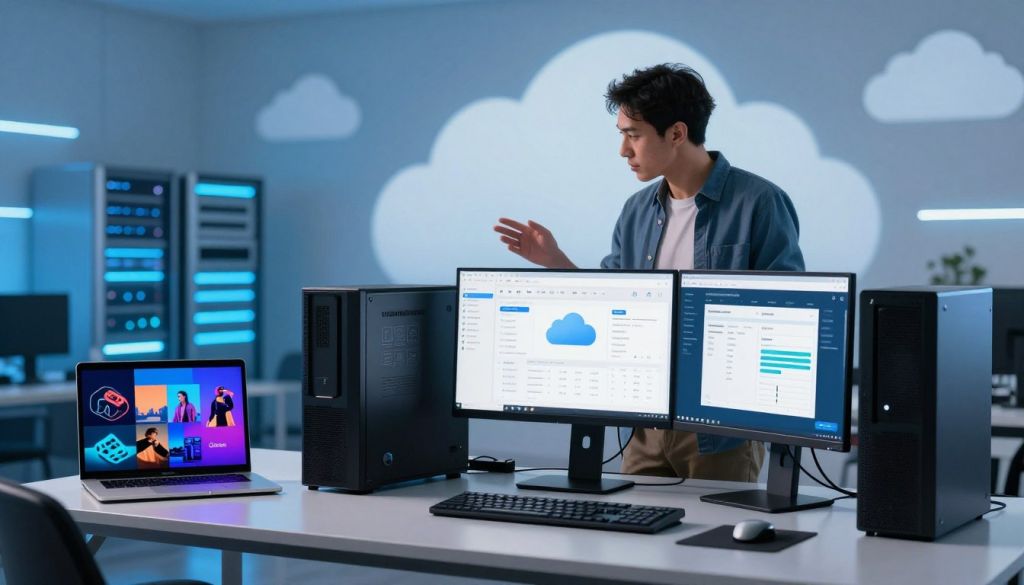
Local FLUX runners typically need 8GB+ VRAM to produce usable output at standard resolutions. That baseline lets a model handle image generation without frequent memory errors.
Local setups give you full offline control and stronger privacy. You avoid sending prompts or images to external platforms. But the initial GPU purchase can be substantial compared to a monthly cloud subscription.
For studios with existing GPU workstations, running models on-premises mostly costs electricity and maintenance time. For casual users, cloud access is an easier entry point and removes setup friction.
| Option | Pros | Cons |
|---|---|---|
| Local | Privacy, low latency, no internet needed | High upfront costs, setup time |
| Cloud | Lower startup, scalable, quick access | Ongoing costs, potential data retention |
Tip: estimate daily images and run a cost crossover analysis. If your monthly cloud costs exceed hardware plus power and upkeep, local models often win for long-term creation.
Strategies for Optimizing Your Monthly AI Budget
Small, consistent changes to your toolset can cut monthly AI costs without hurting output.
Start by tracking where you spend time and money each month. Knowing which model, platform, or app you use most helps you decide what to keep and what to cancel.
Annual Billing Benefits
Paying yearly often reduces the monthly price by up to 20%. If you rely on a single tier for regular creation work, annual billing can lower long-term costs.
Tip: run a breakeven check — if the yearly discount saves more than you’d pay for occasional overages, upgrade to annual.
Tool Stacking
Combine a paid plan for your primary workflows with free tiers for experiments and quick queries. This lets you retain access to premium features while cutting routine expenses.
Developers may use pay-as-you-go API calls for heavy generation bursts and a subscription for daily chat and character tuning. That hybrid approach often lowers total costs by 40–60% for light-to-moderate users.
- Audit subscriptions monthly and cancel unused tools.
- Use trials to validate features before committing.
- Batch high-res images to reduce per-run overhead.
| Strategy | Best for | Expected value |
|---|---|---|
| Annual billing | Regular users | Up to 20% savings |
| Tool stacking | Mixed workloads | Balanced access, lower costs |
| API pay-as-you-go | Developers | Lower variable costs |
Final note: balance the features and limits you need against monthly costs. A lean, tested toolkit delivers the best value for nsfw content creation and general image generation workflows.
Balancing Privacy Policies with Platform Costs
Protecting your work starts with reading a platform’s privacy terms. For adult creators, clear statements like “no training, no review” matter more than a low monthly fee.
Check whether a service uses end-to-end encryption and specifies data retention windows. Those safeguards reduce the legal and ethical risks tied to your nsfw content and images.
Paying a bit more can buy strict controls and faster incident response. Many reputable platforms advertise explicit no-training clauses and limited staff access to stored files.
Also confirm how chat logs and conversation histories are handled. Vague terms can expose your briefs, models, or client work to reuse.
- Verify: explicit no-training and no-review promises.
- Demand: end-to-end encryption and short retention periods.
- Budget: factor privacy features into total pricing decisions.
For most creators, the added peace of mind and safety is worth the extra monthly cost. Investing in privacy-compliant tools protects your creative freedom and keeps your content under your control.
Choosing the Right Plan for Your Creative Workflow
Match the plan to your workflow instead of chasing the top-tier label. Start by listing daily image generation needs and the quality your projects demand.
If you need consistent character appearance, pick a plan that supports LoRA adapters and saved model states. That keeps visual continuity across many images and cuts rework.
Writers and researchers should prioritize a large context window over raw speed. A wider context lets long text and chat threads stay coherent without splitting sessions.
Also check the platform experience. A clean interface and reliable features speed your day and reduce frustration. Slow or buggy tools cost you time and lower the value of any subscription.
- Scaleable tiers: start small, upgrade as projects grow.
- Balance: choose features that improve output and save hours.
- Budget wisely: the priciest option isn’t always the best fit.
| Need | What to look for | Who benefits |
|---|---|---|
| Character continuity | LoRA, model checkpoints | Illustrators, studios |
| Long text work | Large context window | Writers, researchers |
| High-volume images | Batch generation, API access | Agencies, power users |
Focus on the combination of features, value, and reliable performance to pick a plan that keeps your nsfw content production efficient and sustainable. Reassess your needs quarterly to avoid wasted costs and to keep the creative flow strong.
Future Trends in Adult AI Content Pricing
Expect adult AI services to blend subscription plans with per-use fees as business models evolve.
Platforms will consolidate, bundling chat, image generation, and video tools into unified plans. At the same time, niche vendors will focus on specialized models that deliver higher fidelity for specific use cases.

Infrastructure-as-a-service style offerings will let studios scale without big upfront hardware buys. This makes high-end generation more accessible and cuts the time to production.
Pricing transparency will improve. You’ll get detailed analytics that show how many images or model calls drove costs. That data helps you tune workflows and avoid surprise overages.
- Lower costs: competition and model efficiency will reduce per-image price over time.
- Faster inference: better models mean fewer runs and less waste.
- Hybrid plans: base subscriptions plus metered charges become common.
| Trend | What it means for you | Impact on cost |
|---|---|---|
| Hybrid billing | Predictable base fee + overages | Flexible, avoids wasted spend |
| Platform consolidation | All-in-one access to models and tools | Lower per-feature cost |
| Niche specialists | Higher-quality image or video tools | Premium rate for specific needs |
| Transparent analytics | Usage dashboards and alerts | Better budget control |
Stay informed about these shifts so you can adapt your budget and keep your content workflows efficient and competitive.
Conclusion
Choosing a plan means ranking what matters most to you: privacy, feature access, and steady value for creative work. Compare platforms by model access and real-world limits so you know what each tier delivers for image generation and chat needs.
For casual users, the free tier is useful for a trial and quick tests. Professional creators should weigh generation speed, voice and LoRA support, and image quality against monthly costs.
Prioritize platforms with clear no-training, no-review policies to protect your nsfw content and character assets. Use annual billing or tool stacking to cut costs without losing capability.
Stay informed about model advances and market comparison data so your plan scales with your projects and preserves creative control over time.
FAQ
What does each subscription tier include and how do you choose the best one for your needs?
Each tier typically differs by monthly generation limits, access to higher-quality models, and advanced tools like batch processing or faster render speeds. Choose based on how many images or voice clips you create, whether you need API access for automation, and if you require priority support or enhanced privacy. If you produce large volumes, pick a plan with higher throughput or an enterprise option with API credits.
How do usage limits affect your monthly costs?
Usage caps determine the number of images, minutes of voice, or API calls you can make before extra fees apply. Exceeding those limits can trigger overage charges or throttled performance, so monitor consumption and consider a higher tier or annual plan to lower per-unit costs.
What are the main feature differences between basic and professional tiers?
Basic tiers usually grant standard-resolution outputs and limited model choices, while professional tiers unlock premium models, higher-resolution exports, priority generation, and collaboration tools. Professional plans often include commercial licenses and improved privacy controls for sensitive projects.
Is there a free tier and what are its limitations?
Yes, a free tier often exists to let you test core features. Expect low monthly credits, restricted model access, watermarking, and slower queues. It’s useful for trialing workflow and evaluating quality but not suited for consistent commercial use or high-volume production.
How do cloud API costs compare if you’re a high-volume creator?
Cloud API billing is usually metered by compute, image size, or number of requests. High-volume users see better value from bulk or enterprise plans that offer discounted rates, dedicated throughput, and service-level guarantees. You should run cost projections based on typical batch sizes and peak loads.
What technical features improve speed and throughput?
Speed upgrades come from priority queues, GPU-backed instances, and optimized models. Batch processing and parallel API calls also boost throughput. If time-to-delivery matters, pick plans that advertise faster generation times or reserved compute.
How does batch processing affect cost and efficiency?
Batch processing reduces per-item overhead and can lower total cost by bundling requests. Efficient batching minimizes round-trip latency and improves GPU utilization, which benefits creators who generate many variations or run large-scale experiments.
What should you expect when integrating the API into your apps?
API integration requires managing authentication tokens, rate limits, and error handling. Expect per-request billing and potential additional costs for higher throughput. Plan for monitoring, caching, and retry logic to keep costs predictable and performance stable.
What hidden expenses should you watch for in AI content generation?
Hidden costs include overage fees, higher-resolution export charges, data storage, bandwidth for large assets, and third-party tool subscriptions. Also factor in moderation tools, licensing for commercial use, and any privacy-compliance work that may require extra spending.
How do overage fees typically work and how can you avoid them?
Overage fees kick in once you exceed included credits or API quotas and are billed per unit or per request. Avoid them by setting usage alerts, choosing a higher tier with a safety buffer, or switching to annual billing for lower unit costs.
Should you use local hardware or stay with cloud subscriptions?
Local hardware gives you one-time capital cost and full control over data, but requires maintenance and may not scale. Cloud subscriptions offer flexible scaling, managed updates, and lower startup costs. Choose local if you need strict on-premise privacy; choose cloud for elasticity and lower operational overhead.
Do annual billing options save you money?
Yes. Annual billing often discounts monthly rates by 10–30% and can reduce per-image or per-minute costs. If your usage is stable and predictable, annual plans lower long-term spend and simplify budgeting.
What does tool stacking mean and how can it reduce costs?
Tool stacking combines specialized tools—like a cheaper generator for drafts and a premium model for final assets—to optimize cost and quality. Use lower-cost services for bulk work and reserve higher-tier models for high-value outputs to stretch your budget.
How do privacy policies impact platform selection and cost?
Platforms with stronger privacy guarantees may charge more for features like data isolation, private models, or on-premise deployments. Review terms for data retention, model training use, and commercial licensing to avoid unexpected exposure or compliance costs.
What features in professional tiers justify their higher cost?
Professional tiers justify pricing with faster performance, higher-fidelity models, commercial licenses, priority support, collaboration tools, and advanced privacy options. If these features boost productivity or revenue, the higher cost often delivers measurable value.
How do pricing trends look for adult-oriented AI content going forward?
Expect model specialization, stricter compliance features, and tiered licensing to drive prices. Platforms may add more granular controls around moderation and privacy, which could raise costs for creators who need compliant, high-quality outputs.
How do licensing and allowed content rules affect your creative workflow?
Licensing and content restrictions determine what you can sell and how you can use generated assets. Verify commercial use rights, model training clauses, and content safety policies before committing to a plan to avoid takedowns or legal issues.
How can you predict monthly spend for your projects?
Track historical usage, estimate average image or clip size, and account for peak periods. Use provider cost calculators, set alerts, and run a short pilot to gather accurate metrics. This helps you choose the plan that balances cost and capacity.
Are there risks to using lower-cost models for client work?
Lower-cost models may produce lower fidelity, inconsistent outputs, or weaker safety filtering. For client-facing deliverables, quality and compliance matter, so reserve budget for premium models when output quality impacts your brand or legal standing.